
Before You Order Topsoil: Questions About Your Planting Project
By Red River
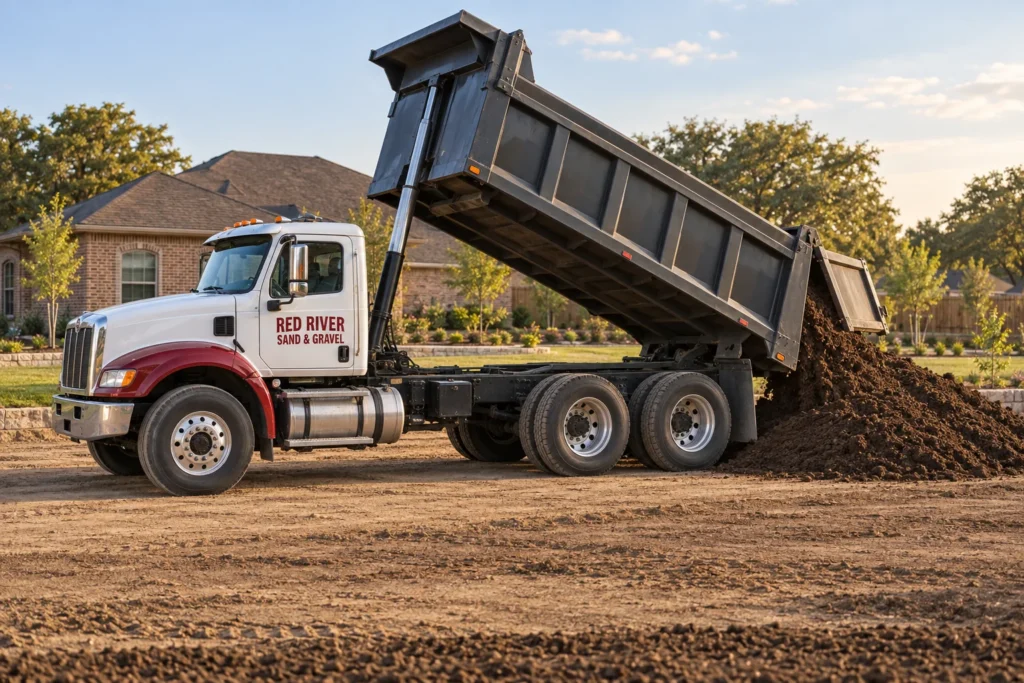
Topsoil can be part of a planting plan, but the useful first question is what the new soil needs to do. A lawn repair, a vegetable bed and a landscape bed may call for different preparation. Before ordering a load for a North Texas project, put the planting goal, area and site conditions on one page. That gives your installer and material supplier something specific to discuss.
What are you planting, and who is setting the soil specification?
Write down the plants or turf you intend to establish, the approximate planting date and whether you are filling a new bed or improving an existing one. If a landscaper, nursery or installer is responsible for the planting, ask that person to specify the soil or amendment they want. The word “topsoil” alone does not establish a composition, texture or suitability for every plant. Confirm the current material description with Red River before treating any option as a match.
What is already on the site?
Walk the area before you measure it. Note low spots, standing water, hard or compacted ground, buried utilities, edging, irrigation and any surface that needs to stay clear. Decide whether the project calls for adding material, removing existing material, regrading, or a combination. Those choices affect both the quantity and the delivery conversation. Keep drainage and any grading plan with the qualified person doing the work; a delivery quote is not a landscape design.
If the question is about nutrients or amendments, a soil test is more useful than a guess. Texas A&M AgriLife Extension’s soil-testing resources explain how testing can inform plant nutrient needs. Its soil-preparation guide also discusses working soil when it is moist rather than wet and preparing planting beds. Use those resources for the horticultural decision, then bring the resulting material specification to your quote request.
How much area will you actually fill?
Measure each section separately: length, width and intended finished depth. A narrow border, a wide bed and a patch of lawn should not be combined into one rough rectangle if they need different depths. Mark the measurements on a sketch and flag any slopes or irregular corners. If the installer has a target depth, use that number rather than a default from a generic online chart.
Our material calculator can help you organize an estimate. Its result is a planning aid; confirm the order unit, final quantity and product with the team before delivery. For a refresher on converting a sketch into an order, see our landscape-bed material list guide.
Where can a delivery be placed?
Choose a receiving spot that your installer can work from and that you can describe accurately. Note the address, preferred entrance, gate or overhead obstacles, nearby parked vehicles, and surfaces you want to protect. Share photographs of the approach and placement area when you request a quote. Confirm the actual placement plan with Red River; do not assume a truck can reach a spot just because a passenger vehicle can.
Five questions to take into the quote conversation
- What planting project and finished depth is the material for?
- Who is confirming the soil specification and preparation method?
- What are the measured sections and estimated quantity?
- What is the current material description and order unit?
- Where is the receiving area, and who will be on site to coordinate?
A clear brief makes the next conversation easier. Red River Sand & Gravel Delivery serves its verified North Texas area. Check the delivery-area page, then Call or Text Now: 469-861-9986, send a text, or request a material quote with your planting plan and measurements. Material, quantity, access and timing are confirmed for each job; a quote request does not reserve a delivery.