
Ordering For A Landscape Bed: Turn Your Sketch Into A Material List
A landscape bed material list starts with a simple sketch, separate measurements and a clear purpose for each area. You do not need a professional drawing to begin a useful delivery conversation. You do need to distinguish the planting space from the path, border and other parts of the project.
For a North Texas property, use the steps below to organize what you know before requesting sand, soil, gravel or rock. Leave undecided products and depths clearly marked as questions instead of turning guesses into an order.
Give Each Part Of The Bed A Name
Draw the outline and label separate areas A, B and C. Mark fixed features such as the porch, fence, trees and existing walkway so someone else can understand the layout. An informal drawing is fine. Add measurements beside each section and write the units rather than relying on the apparent scale of the sketch.
Keep areas with different purposes separate. A planting section, decorative rock border and walking path are three different parts of the brief, even when they sit next to each other. Do not assume that one material or one depth is suitable for all three. Record your designer's or installer's requirements when you have them.
Measure The Area You Actually Plan To Fill
Record length and width for a rectangular section. Divide an irregular outline into manageable shapes and label the pieces so you do not count an overlapping area twice. Note existing features that will remain, such as a paved pad or a large planter, rather than including them automatically in the fill area.
Use measurements you can obtain safely. If a boundary is still undecided, mark it as provisional. A small change in the width of a long bed changes the area, so settle the outline before treating an estimate as the final quantity. Keep a dated copy of the sketch so later revisions are easy to identify.
Separate The Material From Its Intended Use
A useful landscape bed material list has one line for each area and each material. Write what the material is meant to do before choosing a product name. For example, distinguish material intended for a planting area from a decorative surface around it. If a product specification has already been supplied, copy it exactly and identify who provided it.
Avoid describing everything simply as dirt or gravel. Use the material guide to help explain the options you want to discuss. Product suitability, composition and availability need to be confirmed for the actual request. A delivery quote does not replace a landscape design or determine what a particular plant needs.
Add Depth Only When It Has Been Decided
Depth is part of a volume estimate, not a detail to fill in later. Record whether the planned depth describes the finished layer or the material as placed. If compaction, settlement or excavation affects the specification, ask the person responsible for the installation how the order should account for it. Do not add an arbitrary percentage to every material.
For a purely arithmetic example, a rectangular section measuring 12 feet by 4 feet has an area of 48 square feet. If a project specification calls for a 3-inch layer, that is 0.25 feet, giving a geometric volume of 12 cubic feet, or about 0.44 cubic yards. Three inches is an example, not a recommended landscape-bed depth or a confirmed order quantity. The product, site and installation plan still matter.
Explore your own dimensions with the material calculator. Keep each product's estimate separate. If a quote uses tons instead of cubic yards, ask how the supplier determines the conversion for that material rather than using one universal density.
Turn The Sketch Into A Short Ordering Brief
Use the same labels on the drawing, photos and list. A practical line item might read: “Area A, front planting bed, 12 feet by 4 feet, material and depth awaiting installer confirmation.” That line is useful even though it is not ready to order. It tells everyone which decisions are still open.
For each line, record the area label, intended use, selected product or open question, dimensions, specified depth, estimated quantity and unit. Add who confirmed the specification and whether the dimensions have changed. Keep separate products on separate lines, even when they will be delivered to the same address.
Attach a few clear site photos using our material quote photo checklist. Photos explain the setting; measurements explain the quantity. Keep the delivery address and private access details in the direct quote conversation rather than posting the entire brief publicly.
Plan Where Each Material Will Go
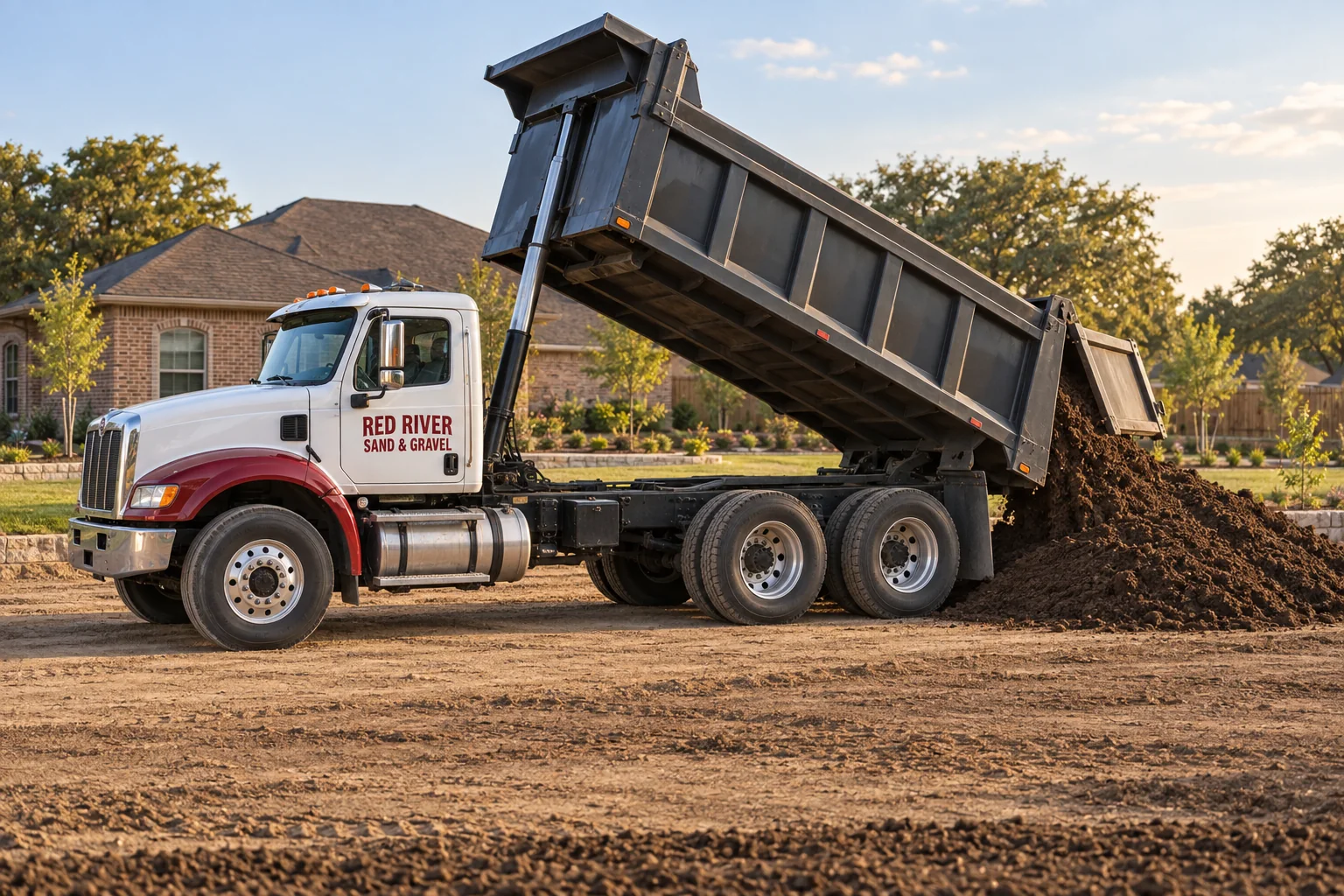
The finished bed and the proposed unloading spot may be different places. Mark the proposed delivery location on your sketch, explain how the truck would reach it and say who will move the material from that spot to the bed. Do not assume that delivery includes spreading or installation.
If the project uses more than one product, discuss how the materials can remain separate and whether work needs to happen in stages. Keep access routes and the next part of the project in mind when suggesting placement. Our delivery preparation checklist helps you organize that conversation. Placement and access remain subject to the actual delivery arrangements.
Discuss Your Landscape Bed Material List With Red River
Bring the sketch, individual measurements, product specifications, delivery address and preferred timing. Tell us which quantities are estimates and which decisions still need an installer or designer. Red River can discuss material delivery for your North Texas project and confirm the details for a job-specific quote.
Call or Text Now: 469-861-9986, text Red River, or request a delivery quote. A clear list makes the first conversation easier and gives you a better starting point for the order.